
Sweent Selected for the NATO Innovation Continuum 2026
We’re heading to the front lines of defense tech. Sweent was selected from among hundreds of companies and invited to take part in the NATO Innovation Continuum 2026.
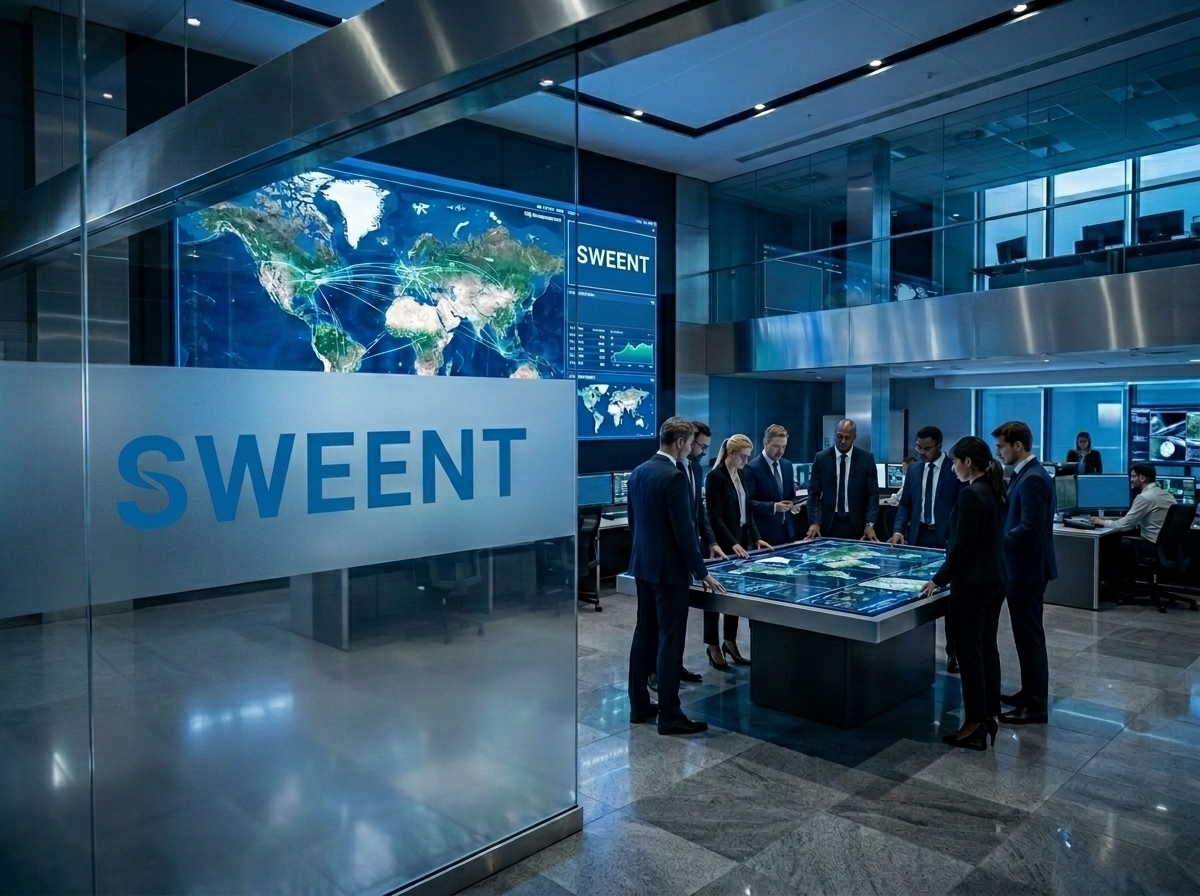
We’re excited to share that Sweent was selected from among hundreds of companies and invited to take part in the NATO Innovation Continuum 2026—a year-long program that brings together technology companies from across NATO’s allied nations to develop and present solutions that address some of the Alliance’s most pressing challenges.
Out of a large pool of applicants from around the world, Sweent was one of the companies chosen to move forward. It’s a milestone we’re incredibly proud of—and one that reflects the caliber of work our team delivers every day. But beyond the pride of the selection, there’s a massive technical mountain to climb. Programs like this aren't just about winning a bid; they’re about proving that your stack can survive in environments where 'failure' isn't just a 500 error on a dashboard.
What Is the Innovation Continuum?
Think of it as NATO’s way of finding and fast-tracking the best new technology for defense and security. Every year, NATO invites companies, universities, and research organizations to propose solutions in areas like artificial intelligence, cybersecurity, autonomous systems, and advanced communications. The ones that make the cut enter a structured program of workshops, collaborative design sessions, and live demonstrations—working side by side with NATO’s own technical experts.
The bar is high. NATO evaluates each submission on strategic relevance, technology maturity, real-world use cases, and the ability to work within existing systems.
We’ve spent years building enterprise web solutions and data pipelines for commercial giants and federal agencies. And we’ve learned that 'strategic relevance' is often code for 'does this actually solve a problem without breaking ten other things?' In the defense world, that means interoperability. You can't just drop a shiny new AI tool into the mix if it doesn't talk to legacy systems or if it requires a massive, un-vetted cloud footprint.
What We Brought to the Table
Our proposal focused on AI-powered solutions designed to improve how organizations train, learn, and make decisions under pressure. We can’t go into all the details, but the core idea is straightforward: use modern AI to make training smarter and more adaptive, while giving decision-makers better tools to process complex information in real time.
In our commercial work, we often see organizations struggling with 'data swamps'—they have all the info they need, but it's buried under layers of bad UI and disconnected databases. We’ve seen this happen with marketing analytics and enterprise dashboards. In this program, we're taking those same principles of data aggregation and real-time visualization and applying them to high-stakes training environments.
We’re looking at how Large Language Models (LLMs) can be utilized through Retrieval-Augmented Generation (RAG) to provide instant, context-aware guidance. Imagine a training simulation where the 'instructor' isn't just a static script, but an AI that understands the specific technical manuals and operational procedures of the Alliance. It changes the game for how quickly a force can adapt to new equipment or changing threats.
The Engineering Challenge of Adaptive Training
Building an adaptive training tool isn't as simple as plugging an API key into a frontend. We have to think about data sovereignty and security. When we work with AWS GovCloud or IBM Watsonx, we’re dealing with environments where every byte of data has to be accounted for.
For our Innovation Continuum work, we're focusing on several technical pillars:
Contextual Intelligence: Using vector databases to ensure the AI only speaks from approved, authoritative sources.
Real-time Processing: Building pipelines that can ingest sensor data or simulation logs and provide immediate feedback.
User-Centric Design: Making sure the interface doesn't get in the way. If a decision-maker has to fight the UI to find an answer, the technology has failed.
So, we’re leaning heavily on our experience with React 18 and Node.js to build fast, responsive interfaces that can handle complex data visualizations without lag. We’ve found that the same performance optimizations we use for high-traffic marketing sites—like code splitting and efficient state management—are just as critical in a tactical dashboard.
Our First Event: SPARK in Sofia, Bulgaria
In February, we participated in SPARK—the program’s opening event, held in Sofia, Bulgaria. SPARK is where selected companies and NATO working groups come together for the first time to define the problems worth solving and set the direction for the rest of the year. We joined the AI-focused working group and connected with a cohort of fellow innovators from across the Alliance.
Although we cannot share the details, all we can say is that It was an incredible experience. The caliber of the teams involved and the seriousness of the conversations made it clear how much care goes into this program—and we’re proud to be in that room.
Why This Matters
Sweent is a veteran-owned technology company with deep expertise in AI, cloud, and modern web platforms, backed by strong partnerships with IBM and AWS. We’ve built our reputation on a relentless focus on doing one thing well: building technology that actually works.
Being selected for this program reinforces something we’ve believed from day one: that great technology comes from teams that understand the problem, care about the craft, and deliver.
For our clients and partners, this milestone is also a reflection of the standards we hold ourselves to on every project. The same rigor, security-mindedness, and commitment to quality that we bring to this program is what we bring to every engagement—whether it’s a federal agency, a state government, or a commercial organization.
We’ve seen plenty of projects fail because the dev team was too focused on the latest shiny framework and not focused enough on the user's actual workflow. Our background as a Veteran Owned Business gives us a different perspective. We know what it’s like to rely on equipment in the field, and that drives us to build software that is reliable above all else.
Scaling the Solution
As we move through the Innovation Continuum, the focus shifts from design to demonstration. We’ll be refining our prototypes and proving that our AI-powered training modules can scale across different languages and operational contexts.
And it’s not just about the code. It’s about the infrastructure. We’re utilizing Docker and Kubernetes to ensure our solutions are portable. Whether it's running in a centralized cloud or on an edge server in a remote location, the performance needs to stay consistent. This is where our experience with Terraform and automated CI/CD pipelines through GitHub Actions becomes a lifesaver. We can't afford manual configuration errors when the stakes are this high.
Looking Ahead
The rest of 2026 is going to be a sprint. We’ll be participating in more workshops and live demos, culminating in SHINE 26, where the working groups present their solutions to delegates, NATO Allies and affiliates. It’s a lot of work, but it’s the kind of work that gets us excited to open our IDEs every morning.
If you’re looking for a technology partner with deep experience in AI, cloud, and modern web engineering—we’d love to hear from you. We’re taking everything we learn from the highest levels of international defense and bringing it back to every project we touch.
At the end of the day, whether you're training a multinational task force or managing a global marketing campaign, the goal is the same: give people the right information at the right time so they can make the right call. We're just using a bit more AI to help them get there.
Sweent’s selection for and participation in the NATO Innovation Continuum 2026 do not imply endorsement by NATO or any NATO body.
Frequently Asked Questions
-
What is the NATO Innovation Continuum, and how does selection work?
It's NATO's year-long structured program for fast-tracking technology from member-nation companies, universities, and research organizations — spanning AI, cybersecurity, autonomous systems, and advanced communications. Submissions are scored on strategic relevance, technology maturity, real-world use cases, and ability to integrate with existing Alliance systems. Selected teams progress through workshops, collaborative design sessions, and live demonstrations with NATO's own technical experts.
-
What kinds of problems is Sweent's Innovation Continuum 2026 submission solving?
AI-powered training and decision support under pressure. The core idea: pair Large Language Models with Retrieval-Augmented Generation so the training "instructor" can reason over Alliance-approved technical manuals and operational procedures in real time, rather than replaying a static script. That means forces adapt to new equipment or changing threats on a much tighter loop than traditional curriculum development allows.
-
Why are interoperability and data sovereignty the hardest engineering constraints on a defense AI project?
Because the tool has to talk to legacy systems, run inside AWS GovCloud or IBM Watsonx where every byte is accounted for, and stay portable across centralized cloud, regional data centers, and edge servers in remote locations. That rules out most SaaS-only architectures. Our approach: vector databases for authoritative-source grounding, Docker/Kubernetes for portability, Terraform + GitHub Actions for reproducible deploys, and React 18/Node.js for UIs that survive the latency and bandwidth reality of tactical networks.
-
What happened at SPARK in Sofia, and what does the rest of 2026 look like?
SPARK was the program's opening event in February — selected companies and NATO working groups meeting in person to scope the problems worth solving for the year. Our team joined the AI working group and connected with counterparts across the Alliance. The remainder of the year is a sprint of workshops, prototype refinement, scale validation across languages and operational contexts, and SHINE 26, where the working groups present their solutions to delegates, NATO Allies and affiliates.
-
What does this work mean for Sweent's commercial clients?
The same rigor that made the submission competitive — security-mindedness, interoperability discipline, veteran-led craftsmanship — is exactly what ships on every engagement. We bring the training-under-pressure lessons, the grounded-LLM architecture patterns, and the infrastructure portability back to commercial projects. If the tools survive a defense context, they tend to be more than enough for a federal agency, state government, or enterprise deployment.
Related Posts
-
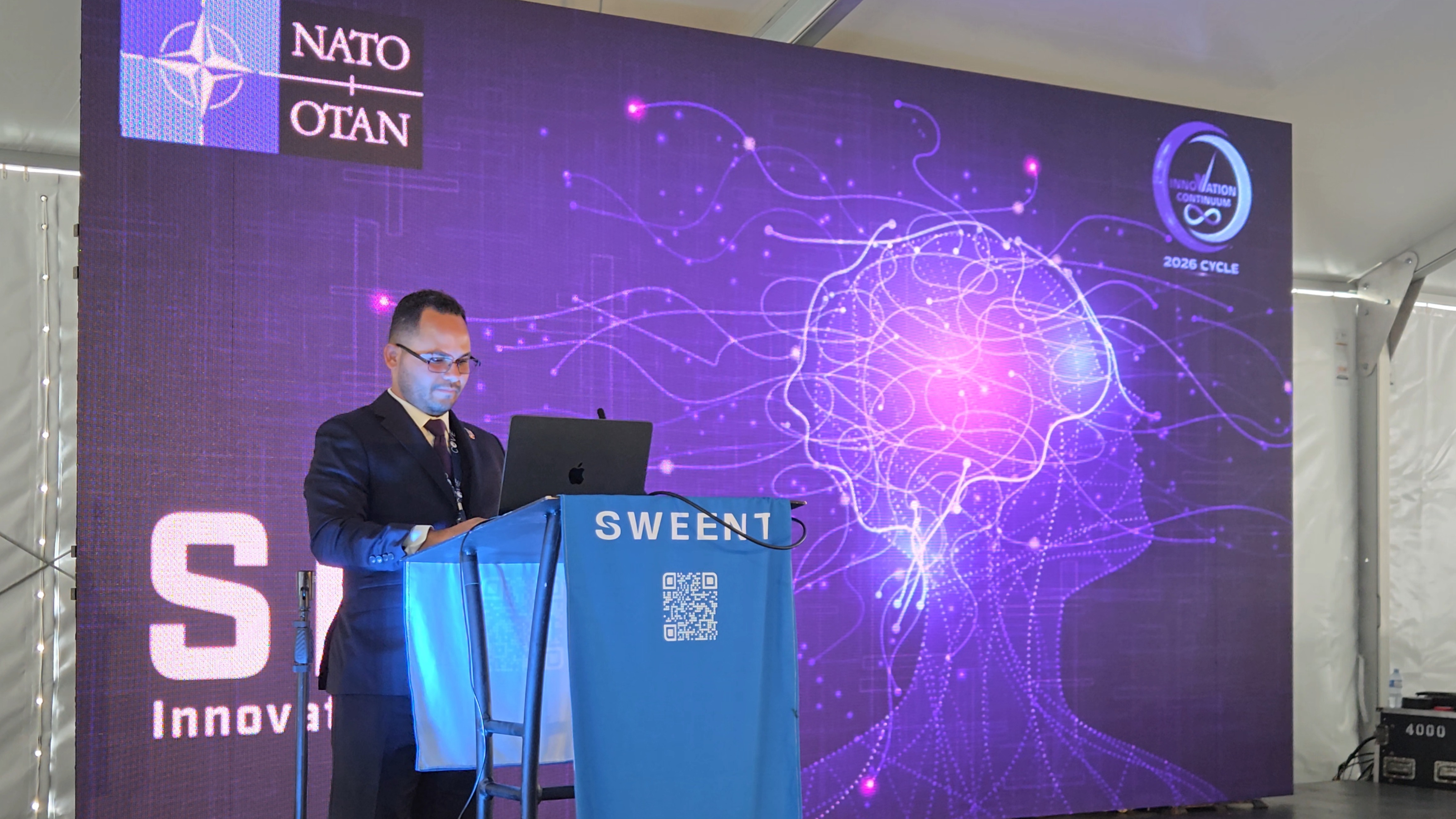
DoctrineDesk by Sweent: Our Capability Demonstration at SHINE 26
At SHINE 26, part of the NATO Innovation Continuum 2026, Sweent showed DoctrineDesk: a capability demonstration of an AI research and planning assistant that answers only from an approved library, cites every sentence, and refuses what it cannot support. Watch the recording and read how it works.
-

Google I/O 2026: Deploying Gemini Agents in Enterprise Environments
Google's 2026 roadmap moves beyond simple chat to autonomous agents. We look at Gemini Spark, Omni, and how Sweent is wiring these into production software.